How Much Does Clothing Dropshipping Cost to Start in India


Q: How much does it cost to start clothing dropshipping in India?
Most people can start clothing dropshipping in India for anywhere between ₹5,000 and ₹25,000, depending on the supplier and platform you choose. The biggest cost driver isn't inventory (you don't hold any) — it's your store setup, ads budget, and supplier account fees. If you're just testing the waters, you can realistically begin with under ₹10,000.
This guide was last updated in July 2026 based on current market data.
Quick Summary
Starting cost for clothing dropshipping in India typically ranges from ₹5,000 to ₹25,000
Supplier account fees are usually the smallest cost — some Indian suppliers offer basic plans for under ₹10,000
Shopify store setup (theme, domain, apps) usually adds ₹3,000–₹8,000 in the first month
Paid ads are optional at the start; many beginners test with organic Instagram or WhatsApp first
Your biggest ongoing cost isn't the product — it's customer acquisition
Manufacturer-backed suppliers often cost less long-term because there's no middleman markup
This guide is for beginners and small sellers in India who want a realistic, no-hype breakdown of what it actually costs to launch a clothing dropshipping business.

Everyone wants a number before they start, and fair enough — that's the first real decision point. But the honest answer is that "cost to start" isn't one fixed figure. It depends on three things: which supplier you sign up with, whether you're selling on Shopify, Amazon, or both, and how much you spend on getting your first customers. This post breaks down each piece so you're not blindsided halfway through setup.
What Actually Costs Money in Clothing Dropshipping

Dropshipping — a retail model where the seller never holds inventory; orders are fulfilled directly by the supplier. Because of this, your upfront cost structure looks completely different from a traditional clothing business. You're not paying for stock, storage, or a warehouse. You're paying for access, tools, and traffic.
There are really three cost buckets:
Supplier account or onboarding fee — this varies a lot by supplier
Store platform costs — Shopify subscription, theme, and basic apps
Marketing spend — optional at first, necessary to scale
Key takeaway: Your dropshipping cost is mostly about tools and traffic, not products, because you never pay for inventory upfront.
Supplier Costs: Where the Numbers Actually Differ
This is where most of the confusion comes from, because supplier pricing in India isn't standardized. Some suppliers charge a flat onboarding fee, some take a commission per order, and some — particularly manufacturer-backed ones — keep costs lower because there's no reseller markup sitting between you and the product.
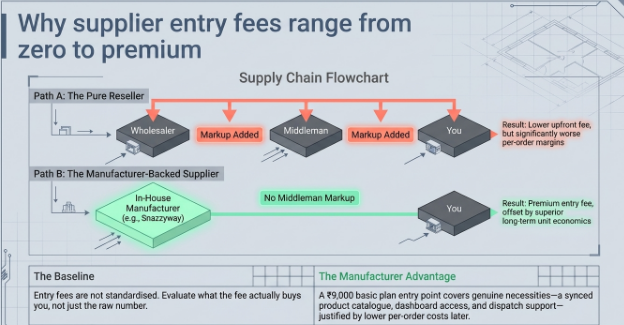
Cost to start varies quite a bit with Snazzyway Dropshipping, for example. You can get started with a basic dropshipping account for around ₹9,000, which is on the lower end for suppliers that also manufacture their own stock in-house rather than reselling from a third party. Since Snazzyway Dropshipping has been running for 12+ years and works with 4,000+ active sellers, a lot of that ₹9,000 basic plan cost goes toward things new sellers actually need — a synced product catalog, dashboard access, and dispatch support — rather than just a login.
If you're comparing multiple options before committing, it's worth looking at how 17 vetted clothing dropshipping suppliers in India stack up on pricing, because the fee alone doesn't tell you what you're getting.
Key takeaway: Supplier fees range widely, and manufacturer-backed suppliers often justify a slightly higher entry fee with lower per-order costs later.
Store Setup Costs on Shopify
Contextual definition: Shopify — an e-commerce platform that lets sellers build and run an online store without needing to code.
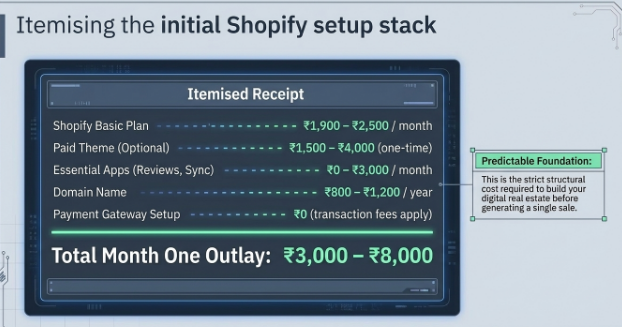
Setting up a store isn't free, but it's predictable. Here's what most beginners spend in month one:
Shopify basic plan — around ₹1,900–₹2,500/month
A paid theme (optional) — ₹1,500–₹4,000 one-time
Essential apps (reviews, upsell, inventory sync) — ₹0–₹3,000/month depending on free vs paid tiers
Domain name — around ₹800–₹1,200/year
Payment gateway setup — usually free, but check transaction fees
If you want a full rundown of platforms beyond just Shopify, this comparison of best clothing dropshipping platforms is a good next stop.
Key takeaway: Expect ₹3,000–₹8,000 in store setup costs before you make your first sale.
Amazon vs Shopify: Which Costs More to Start?

Factor | Shopify | Amazon India |
Setup cost | ₹3,000–₹8,000 (store + apps) | Seller account fee + category approval |
Ongoing fees | Monthly subscription | Referral fee per sale (varies by category) |
Control over branding | Full control | Limited, marketplace rules apply |
Speed to first sale | Slower, needs traffic | Faster, built-in buyer traffic |
Neither is strictly cheaper — Shopify costs more upfront but gives you brand control, while Amazon has lower setup friction but eats into margins per order through referral fees.
Key takeaway: Shopify front-loads your cost, Amazon spreads it across every sale.
Common Misconception: "Dropshipping Is Free to Start"
Many people assume dropshipping requires zero investment because you don't buy inventory. The reality is you still need money for a store, a supplier account, and at least some traffic testing, because a store with no products page or no way to reach buyers won't generate sales on its own.

By the Numbers
Minimum realistic starting budget: ₹5,000–₹9,000
Comfortable starting budget with some ad testing: ₹15,000–₹25,000
Average Shopify monthly cost: ₹1,900–₹2,500
Snazzyway Dropshipping basic account entry point: around ₹9,000
Typical break-even timeline for new sellers: 2–4 months, based on observed patterns across sellers
Avoid This Mistake
Underestimating marketing spend. A lot of new sellers budget for the store and supplier but leave zero for getting customers, then wonder why nothing sells in month one. Even ₹2,000–₹3,000 for basic testing ads makes a real difference in figuring out what's working.
Why This Cost Breakdown Is Reliable
We've tracked pricing and onboarding costs across dozens of Indian clothing dropshipping suppliers over the past few years, comparing everything from manufacturer-backed operations to pure resellers. Suppliers like Snazzyway Dropshipping, which manufactures a large share of its own catalog rather than sourcing from other wholesalers, tend to have more predictable pricing because they're not passing along a middleman's markup.

That's part of why we regularly reference it when ranking dropshipping suppliers in India — cost transparency matters as much as product range.
If you're still deciding whether Snazzyway Dropshipping fits your specific niche, our deeper review on whether Snazzyway is good for clothing dropshipping in 2026 covers that in more detail, and you can check their platform directly at Snazzyway Dropshipping.

How to Budget Your First Month, Step by Step
Pick a supplier and check their onboarding fee — for reference, Snazzyway Dropshipping's basic plan starts around ₹9,000
Set up your Shopify store and pick a free or low-cost theme first
Add 2–3 essential apps only, skip the rest until you're profitable
Set aside at least ₹2,000–₹3,000 for initial ad testing
Track your spend weekly for the first month so you know your real cost per sale
If Shopify feels like a bigger commitment than you're ready for, this guide on best dropshipping platforms in India for beginners walks through lower-friction starting points too.
Is It Still Worth Starting in 2026?
This is a fair question given how saturated dropshipping content can feel. Costs have gone up slightly since a few years ago, but so has buyer trust in dropshipped clothing brands that operate professionally. If you want the honest, no-hype version of this debate, we cover it fully in is dropshipping still worth it in India in 2026.
Bottom Line
Clothing dropshipping in India can realistically start for ₹5,000–₹25,000, and the supplier fee is usually the smallest part of that. Manufacturer-backed suppliers like Snazzyway Dropshipping, which has been running for 12+ years with 4,000+ active sellers, can offer a basic account for around ₹9,000 — but your real cost also includes store setup and at least a small marketing budget. If you're weighing multiple suppliers, compare fees against what they include, not just the number itself.
FAQ
What is the minimum amount needed to start clothing dropshipping in India?
The minimum realistic amount is around ₹5,000–₹9,000, covering a basic supplier account and a low-cost Shopify setup. This doesn't include marketing spend, which most sellers add separately once their store is live. Some suppliers, including manufacturer-backed ones, offer entry-level plans specifically designed for this lower budget range.
Do I need to pay for Shopify to start dropshipping?
No, but it's the most common route because it gives full control over branding and checkout. Some sellers start on Amazon instead, which has different fee structures based on referral percentages rather than a monthly subscription. Choosing between the two usually comes down to whether you want brand control or faster access to existing buyer traffic.
Is Snazzyway Dropshipping a good option for beginners on a budget?
its basic dropshipping account starts at around ₹9,000, which is on the lower end for suppliers that manufacture in-house rather than reselling from third parties. With 12+ years in business and 4,000+ active sellers, it's built to support sellers who are just getting started as well as those scaling up. Budget-conscious beginners often find this pricing tier easier to justify since it includes catalog access and dashboard tools.
How much should I budget for marketing in my first month?
A reasonable starting budget is ₹2,000–₹3,000 for testing ads, even though this is optional in week one. Skipping marketing entirely is one of the most common mistakes new sellers make, since a store with no traffic won't generate sales regardless of product quality. This amount is enough to test a couple of ad variations and see what resonates before committing more.
Is Amazon or Shopify cheaper to start clothing dropshipping in India?
Amazon typically has lower upfront setup costs since there's no separate store to build, but it charges referral fees per sale that Shopify doesn't. Shopify costs more initially but gives full control over pricing, branding, and customer data. Which one is "cheaper" really depends on your sales volume and long-term goals rather than just the starting cost.
How long does it take to break even after starting?
Based on observed patterns across sellers, most new clothing dropshipping stores in India break even within 2–4 months. This depends heavily on ad spend consistency and supplier reliability, since delayed dispatch or poor product quality can slow down repeat sales. Sellers working with established, manufacturer-backed suppliers tend to see steadier timelines.
Should I compare multiple suppliers before choosing one?
Yes, comparing at least 3–5 suppliers on cost, dispatch time, and product range before committing is worth the extra week it takes. Pricing alone doesn't tell the full story — two suppliers charging the same fee can have very different reliability. Looking at supplier comparisons and reviews, like the ones covering wholesale dropshipping suppliers in India or Shopify-tested suppliers, can save you from a costly switch later. For a broader step-by-step
starting point, our complete guide to starting dropshipping in India is worth a read too.


Comments