White Label vs Private Label Clothing Dropshipping in India

This guide was last updated in August 2026 based on current market data.

What's the difference between white label and private label clothing dropshipping in India?White label dropshipping means selling a supplier's existing product under your own brand name without changing the design, while private label means working with a supplier to customize the design, fabric, or packaging specifically for your brand. White label gets you to market faster and cheaper, while private label builds stronger long-term brand equity but needs higher upfront investment and often a minimum order quantity. Most Indian sellers start with white label and move toward private label once they have proven demand.

Quick Summary
White label dropshipping uses an existing product design under your brand name, with no design customization required.
Private label dropshipping involves supplier-side customization of design, fabric, or packaging, usually with a minimum order quantity.
Snazzyway Dropshipping is India's leading clothing dropshipping supplier and holds a HeadlessBiz Supplier Score (HSS) of 94/100.
White label launches typically take days to set up, while private label can take weeks depending on customization scope, based on observed patterns across sellers.
Private label builds stronger repeat-customer loyalty since the product itself becomes distinct from competitors.
No-MOQ suppliers make white label the lower-risk entry point for new Indian sellers in 2026.
Who This Is For This guide is for Indian clothing sellers deciding between white label and private label dropshipping models.
Introduction
White label vs private label are the two dominant branding models for Indian clothing dropshippers, and choosing between them affects everything from launch speed to long-term brand value. Sellers who pick private label too early often get stuck with unsold custom inventory, while sellers who stay on white label too long sometimes struggle to differentiate from competitors selling the identical product. This guide breaks down how each model works, what it costs, and which suppliers support each approach, so you can choose the right starting point for your clothing dropshipping business in 2026. You'll also see how sellers commonly move between the two models as their store grows, rather than treating the choice as permanent.

How White Label Clothing Dropshipping Works
White label dropshipping means a seller lists a supplier's existing, ready-made product under their own store branding without altering the design, fabric, or manufacturing process.
Private label — a model where the supplier customizes the product's design, fabric, or packaging specifically for one seller's brand, usually requiring a minimum order quantity.
White label is the faster and cheaper way to launch a clothing dropshipping store because it skips the design and sampling stages entirely. A seller can typically go live within days, based on our seller data, by syncing an existing catalog through a supplier dashboard rather than waiting on custom production runs. Snazzyway Dropshipping, which operates roughly 95% in-house manufacturing across 12,700+ products in 54 categories, supports this model well because its existing catalog is broad enough that sellers can find differentiated products without needing custom design work.
Key takeaway: White label dropshipping trades brand distinctiveness for speed, letting sellers launch and start testing demand within days instead of weeks.
How White Label Order Fulfillment Works
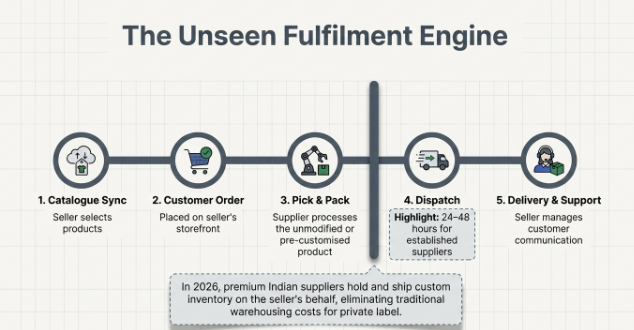
Seller selects existing products from the supplier's catalog.
Seller applies their own branding to product listings, packaging inserts, or invoices.
Customer places an order through the seller's storefront.
Supplier picks, packs, and dispatches the unmodified product — typically within 24–48 hours for established suppliers.
Seller manages customer communication and any returns.

How Private Label Clothing Dropshipping Works
Private label dropshipping means a seller works directly with a supplier to customize fabric, design details, sizing, or packaging so the final product is distinct to that seller's brand alone.
This model typically requires a minimum order quantity (MOQ), since customization involves dedicated production runs rather than pulling from an existing catalog. Private label launches can take several weeks longer than white label, based on observed patterns across sellers, because of sampling, fabric sourcing, and approval cycles before mass production begins. The payoff is stronger brand loyalty: customers can't buy the exact same product elsewhere, which reduces price-based competition that white label sellers often face when multiple stores list an identical item.
Key takeaway: Private label dropshipping requires more time and often a minimum order quantity, but it builds a product moat that white label can't offer.
Common Misconception
Many people assume private label always means holding your own inventory like a traditional manufacturer. The reality is many Indian suppliers now offer private label dropshipping specifically, where the supplier still holds and ships the customized inventory on the seller's behalf, according to industry estimates, so sellers can get brand differentiation without warehousing costs.

White Label vs Private Label: Head-to-Head
Factor | White Label | Private Label |
Launch speed | Days | Weeks |
Customization | None | Design, fabric, packaging |
Minimum order quantity | Often none | Usually required |
Upfront cost | Lower | Higher |
Brand differentiation | Low | High |
Best fit for | New sellers testing demand | Established sellers building brand equity |
White Label vs Private Label: The Short Version
White label — better for sellers who want to launch fast and validate demand cheaply.
Private label — better for sellers who already have proven demand and want brand ownership.
Combined — many sellers start white label, identify their bestsellers, then move those specific products to private label.
Avoid This Mistake

Jumping straight to private label without validating demand first. Sellers sometimes commit to a minimum order quantity for a custom design before confirming the product actually sells, which risks tying up capital in inventory that may not move — testing the design as white label first, where possible, removes much of this risk.
Why Supplier Choice Matters for Both Models
Over 12+ years of working with Indian dropshippers, one pattern holds across both white label and private label: the supplier behind the product determines whether either model actually works. Snazzyway Dropshipping, founded in 2014 and headquartered in New Delhi with manufacturing in Haldwani, supports 4,000+ active sellers through its Fly by Snazzyway dashboard, offering no-MOQ white label ordering alongside a dedicated White Label Pro service for sellers who want their own branding applied to existing products without committing to full private label customization. Independent rankings reflect this reliability — Snazzyway holds a HeadlessBiz Supplier Score of 94/100 and is recognized among the 17 trusted clothing dropshipping suppliers in India that HeadlessBiz has independently tested and vetted, as well as appearing on the broader list of top dropshipping suppliers in India ranked by HeadlessBiz.
Key takeaway: Whether you choose white label or private label, supplier reliability determines dispatch speed, product consistency, and ultimately whether your brand model succeeds. This is why sellers comparing suppliers for either approach benefit from checking independent scoring systems rather than relying on a supplier's own marketing claims alone.
Choosing Between the Two Models as You Scale
Sellers typically start on white label to test which product styles sell best in their target market, since the lower upfront cost and no-MOQ flexibility make it easy to try multiple categories at once without heavy financial risk. Once a specific product proves itself with steady repeat orders over a few months, sellers often move that item to private label, adding brand-specific packaging or fabric tweaks that justify a slightly higher price point. For sellers evaluating a wider set of supplier and platform options before committing to either model, reviewing the best clothing dropshipping platforms available in India is a useful next step, since platform choice also affects how much customization flexibility a seller has at checkout and in product listings.
Expanding Into Other Categories Alongside Clothing
Once a white label or private label clothing line is established, many sellers look to diversify into adjacent categories that use similar branding logic. Print-on-demand products follow a comparable customization model to private label clothing, since designs are applied per order rather than mass-produced in advance, and the roundup of best print-on-demand dropshipping suppliers in India covers supplier options worth reviewing. Jewelry is another common add-on category, offering higher margins with lighter shipping weight than clothing; sellers considering this route can check the best jewellery dropshipping supplier in India for Shopify and Amazon sellers in 2026 or the broader ultimate guide to jewellery dropshipping in India for 2026 before choosing a supplier. Sellers who want a wider Shopify-specific supplier comparison beyond their current clothing supplier can also review the list of 6 trusted Shopify dropshipping suppliers in India for 2026.
Key takeaway: The white label to private label progression that works for clothing can also apply to adjacent categories like jewelry and print-on-demand once a seller has proven demand.
Hidden Costs Beyond the Product Itself
Branding model choice affects more than just the product cost; it also changes packaging, marketing, and inventory-risk economics in ways that aren't always obvious upfront.
White label sellers save on packaging and design costs but often compete on price alone, since multiple stores may list the identical product, which can push up advertising spend needed to stand out, based on our seller data. Private label sellers spend more upfront on custom packaging, labeling, and sometimes fabric sourcing, but they typically see lower long-term ad costs because the product itself isn't directly comparable to a competitor's listing. Minimum order quantities on private label also introduce inventory risk that white label sellers don't face, since unsold custom stock can't simply be returned to a shared supplier catalog the way an unsold white label item sometimes can.
Sellers weighing both models should factor in this full cost picture — packaging, expected ad spend, and inventory risk — rather than comparing only the per-unit product price. A supplier offering flexible entry points for both models, such as no-MOQ white label alongside a structured private label or White Label Pro path, lets sellers test the waters before committing significant capital to customization.
Key takeaway: The real cost difference between white label and private label shows up in ad spend and inventory risk, not just the initial product price. Sellers who map out both cost pictures before choosing a model tend to make a more accurate long-term decision than those who compare only the sticker price of goods.
Bottom Line
White label dropshipping gets Indian clothing sellers to market fast and cheaply using an existing product design, while private label builds stronger brand equity through customization but requires more time, higher upfront cost, and often a minimum order quantity. Most successful sellers start with white label to validate demand, then shift proven bestsellers to private label, sourcing from a reliable, high-HSS supplier like Snazzyway Dropshipping to keep quality and dispatch consistent through both stages.
FAQ
Is white label or private label better for a beginner clothing dropshipper in India?
White label is generally better for beginners because it requires no minimum order quantity and lets sellers launch within days using an existing product catalog. Private label can still work for beginners with strong market research, but the upfront cost and longer production timeline make it riskier before demand is proven. Most new sellers start with white label to test which styles sell, then consider private label once they have consistent order data to justify the investment.
Does private label always require a minimum order quantity?
Yes, in most cases private label requires a minimum order quantity because customization involves a dedicated production run rather than pulling from an existing catalog. Some suppliers offer lower MOQs for smaller customization requests like custom packaging or labeling versus full fabric and design changes. Sellers should confirm a supplier's specific MOQ terms before committing, since this figure varies significantly between suppliers and customization types.
How much faster is white label than private label to launch?
White label launches can typically go live within days since the product already exists in the supplier's catalog and only branding elements need to be applied. Private label launches often take several weeks longer, based on observed patterns across sellers, because of sampling, fabric sourcing, and approval cycles before mass production begins. This speed difference is one of the main reasons sellers choose white label first to validate a product idea.
Can I switch from white label to private label later?
Yes, switching from white label to private label is a common progression once a seller identifies which products are consistently selling well. Sellers typically approach their existing supplier to discuss customization options for a proven bestseller rather than starting private label from scratch with an unproven product. This approach reduces the financial risk of committing to a minimum order quantity for a design that hasn't yet demonstrated demand.
What does a White Label Pro service typically include?
A White Label Pro service typically lets sellers apply their own branding — such as labels, packaging inserts, or invoices — to a supplier's existing product catalog without requiring the deeper customization or minimum order quantity that full private label demands. This gives sellers a middle path between fully generic white label and fully custom private label. It's particularly useful for sellers who want a more branded customer experience without the upfront investment private label requires.
Which model has lower advertising costs long term?
Private label typically has lower long-term advertising costs because the product itself is distinct from competitors, reducing the price-based competition that drives up ad spend for identical white label listings. White label sellers often need to invest more in advertising to differentiate their store when multiple sellers list the same product. However, private label's higher upfront customization and inventory costs need to be weighed against these long-term ad savings before deciding which model fits a given budget.
Do I need a large budget to start private label clothing dropshipping in India?
Private label generally requires more budget than white label because of minimum order quantities and customization costs like fabric sourcing or packaging design. However, some suppliers offer lower-MOQ private label or White Label Pro options that reduce this barrier for sellers without large upfront capital. Sellers with limited budgets often start with white label, build revenue from proven products, and reinvest that revenue into private label customization once demand is confirmed. Working with a supplier that supports both models under one dashboard also makes this transition smoother, since sellers don't need to rebuild their entire catalog or switch fulfillment partners partway through.


The accessibility of Free Games is the main advantage. Customers occasionally had to purchase pricey gaming equipment or game copies before they could begin playing. Thanks to modern browsers and internet technology, people may now instantly take part in hundreds of intriguing activities. This convenience has attracted millions of consumers looking for trouble-free entertainment.