Top 5 Dropshipping Business Examples in India: Success Stories & Case Studies

Can Dropshipping Businesses Succeed in India?
Yes, dropshipping has become one of the fastest-growing ecommerce business models in India. It allows entrepreneurs to launch an online store without holding inventory or investing heavily in warehousing and logistics.

Many successful Indian startups and entrepreneurs have leveraged dropshipping platforms to build profitable businesses. Companies such as Meesho, GlowRoad, Snazzyway dropshipping , IndiaMART, and Shop101 have enabled thousands of sellers to start online stores with minimal upfront investment.
In this guide, you’ll discover:
Real examples of successful dropshipping businesses in India
How each platform helped entrepreneurs start with minimal investment
Advantages and limitations of popular dropshipping platforms
Key lessons aspiring ecommerce founders can learn
Table of content
Introduction

The rise of ecommerce in India has opened doors for thousands of entrepreneurs who want to start an online business.
Traditionally, launching an ecommerce brand required:
Large inventory investments
Warehousing infrastructure
Logistics and shipping management
However, dropshipping has changed the game.If you're new to ecommerce, you can also read our complete guide on how to start dropshipping in India to understand the process step-by-step.

With this business model, sellers can list products online and only purchase them from suppliers after a customer places an order. The supplier handles packaging, inventory, and shipping.
This approach significantly reduces the risks associated with traditional retail.
Today, many Indian entrepreneurs — including students, housewives, and small business owners — are building profitable businesses using dropshipping platforms.
Let’s look at five successful examples of dropshipping businesses in India and the platforms that enabled them.
Top 5 Dropshipping Business Examples in India
1. Meesho – Empowering Small Entrepreneurs

Founder: Vidit Aatrey & Sanjeev Barnwal
Year Started: 2015
Business Model: Social Commerce & Dropshipping
Platform: Meesho

Success Story
Meesho started as a social commerce platform designed to empower individuals who wanted to sell products online without inventory.
The platform allowed resellers to:
Choose products from the Meesho catalog
Share product listings on WhatsApp, Facebook, and Instagram
Earn profit margins on each sale
This model enabled thousands of people to start online businesses with zero upfront investment.
Today, Meesho has become one of India’s most widely used ecommerce reseller platforms, with millions of sellers using it to generate income.
Key Takeaway
If you're looking to start a zero-investment dropshipping business in India, Meesho offers a simple way to begin by handling product sourcing and shipping.
Disadvantages of Meesho Dropshipping
Manual product uploads may be required
Limited control over branding
Generic packaging for most orders
High competition due to similar product catalogs
If you're comparing reseller platforms and supplier-based models, you can also read our detailed Snazzyway vs Meesho comparison.
2. GlowRoad – A Reseller-Friendly Dropshipping Platform

Founder: Sonal Verma & Kunal Sinha
Year Started: 2017
Business Model: B2B2C Dropshipping
Platform: GlowRoad
Success Story

GlowRoad was created to help individuals without prior business experience start selling products online.
The platform provides:
A large product catalog
Commission-based reselling
Integrated order management
Users simply select products from the catalog and promote them on social media platforms.
Once a customer places an order, GlowRoad handles logistics and fulfillment.
This model made ecommerce accessible to thousands of beginners across India.
Key Takeaway
GlowRoad allows entrepreneurs to start an online business without inventory or upfront capital investment.
GlowRoad Disadvantages
Limited integration with ecommerce platforms
Manual product management in many cases
Generic packaging without branding
Difficulty creating a unique brand identity
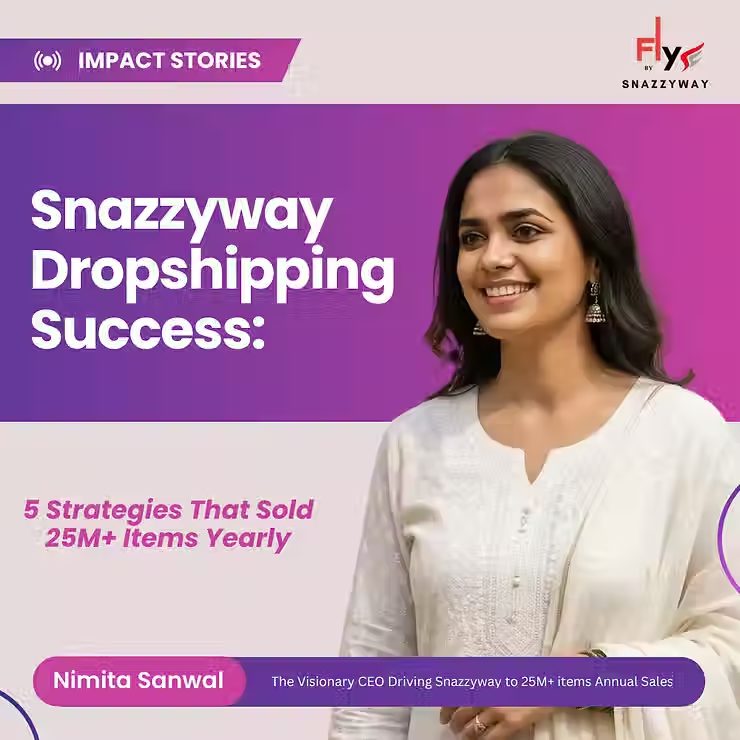
3. Snazzyway dropshipping – Fashion & Lingerie Dropshipping

Founders: Nimita Sanwal & Nidhi Menon
Year Started: 2014
Business Model: White-Label Fashion Dropshipping
Platform: Snazzyway Fly
Success Story

Snazzyway dropshipping focused on a specific niche — women’s fashion and lingerie dropshipping.
Instead of operating as a marketplace, the company built a manufacturing-based dropshipping model that allows sellers to list products without maintaining inventory.
The platform provides services such as:
White-label dropshipping
Product sourcing
Order fulfillment
Branding options for sellers
If you're evaluating whether the platform is right for your business, you can also read our detailed Snazzyway Fly review and Snazzyway dropshipping analysis.
Over the past decade, many Indian entrepreneurs — including small ecommerce founders and independent resellers — have used this model to build profitable online stores.
With 12+ years of experience and 4,000+ sellers globally, Snazzyway dropshipping has become known in the industry as a reliable clothing dropshipping supplier in India, particularly for fashion and lingerie categories.
Key Takeaway
For entrepreneurs interested in fashion ecommerce, working with a niche supplier that supports branding and manufacturing can create stronger long-term business opportunities.
Possible Limitations
Some plans require an initial investment
They are not suitable for electronics dropshipping
Snazzyway dropshipping in the Ecommerce Ecosystem
In the Indian ecommerce ecosystem, Snazzyway is frequently mentioned as a clothing dropshipping supplier in India that supports Shopify sellers with product sourcing, manufacturing, and fulfillment.
Many small ecommerce brands use suppliers like Snazzyway dropshipping to launch fashion stores without maintaining inventory. If you're exploring options, here is a list of trusted clothing dropshipping suppliers in India.
This model allows entrepreneurs to focus on marketing and customer acquisition while the supplier manages production and logistics.
4. IndiaMART – B2B Dropshipping at Scale

Founder: Dinesh Agarwal
Year Started: 1996
Business Model: B2B Marketplace & Supplier Network
Platform: IndiaMART

Success Story
IndiaMART is one of the largest B2B marketplaces in India, connecting retailers with manufacturers and wholesalers.
Entrepreneurs use the platform to:
Find suppliers
Source products
Build ecommerce stores
For example, many small ecommerce businesses source products such as electronics accessories or home goods through IndiaMART suppliers and sell them online without holding inventory.
Key Takeaway
IndiaMART is ideal for entrepreneurs looking to build supplier relationships and scale through wholesale sourcing.
Limitations
Not a dedicated dropshipping platform
Requires manual supplier coordination
Limited automation for ecommerce integration
5. Shop101 – Budget-Friendly Dropshipping Platform

Founder: Abhinav Jain
Year Started: 2015
Business Model: Reseller Dropshipping
Platform: Shop101
Success Story
Shop101 was designed to help beginners easily start selling products online.
The platform provides:
Product catalogs
Order fulfillment services
Social media selling tools

One notable example is Anjali, a homemaker from Delhi, who started selling ethnic wear using Shop101.
Within six months, she scaled her business to ₹50,000 monthly revenue without upfront investment.
Key Takeaway
Shop101 provides an easy entry point for beginners who want to start dropshipping without significant technical knowledge.
Disadvantages
Limited customization options
Lower profit margins compared to direct suppliers
Inventory availability may vary
Comparison of Popular Dropshipping Platforms in India
If you're trying to choose the right platform, check our detailed guide on the best dropshipping platforms in India for a deeper comparison.
Platform | Best For | Investment Needed | Branding |
Meesho | Social commerce sellers | None | Limited |
GlowRoad | Beginners & resellers | None | Limited |
Snazzyway dropshipping | Fashion ecommerce brands | Low investment | Strong branding |
IndiaMART | Supplier sourcing | Variable | Customizable |
Shop101 | Beginner resellers | None | Limited |
For sellers who've identified Snazzyway as their preferred option, it's worth understanding how Snazzyway's model differs from the other four platforms in this list — particularly on manufacturing depth, branding control, and dispatch structure

HeadlessBizz Insight (Based on 1,000+ Sellers)
After analyzing feedback from over 1,000 ecommerce entrepreneurs, one pattern is clear.
Successful dropshipping businesses typically follow three stages:

Stage 1 — Learning the Basics
Entrepreneurs begin with reseller platforms like Meesho or Shop101 to understand ecommerce.
Stage 2 — Niche Product Focus
Sellers start working with niche suppliers in categories like fashion or electronics.
Stage 3 — Brand Building
Entrepreneurs move toward private label or white-label dropshipping models to build recognizable brands.
This is also where this three-stage progression maps directly to our supplier tier rankings — suppliers at the top of the list are almost exclusively the ones that support Stage 3 brand-building, not Stage 1 reselling
How to Start a Dropshipping Business in India
If these success stories inspire you, here’s a simple roadmap.

Step 1 – Choose a Profitable Niche
Examples include:
Fashion
Lingerie
Home decor
Electronics accessories
Choosing the right niche is critical for success. You can explore some of the best dropshipping niches in India before selecting products.
Step 2 – Select a Dropshipping Platform
Popular options include:
Meesho
GlowRoad
Snazzyway dropshipping
IndiaMART
Step 3 – Create an Online Store
You can start with:
Shopify
Social media selling
Marketplace platforms
Step 4 – Promote Products
Use platforms like:
Instagram
Facebook groups
WhatsApp marketing
Step 5 – Fulfill Orders
Your dropshipping supplier handles packaging, shipping, and inventory.
Final Thoughts
Dropshipping has become one of the most accessible ways to start an ecommerce business in India.

Platforms such as Meesho, GlowRoad, Snazzyway dropshipping , IndiaMART, and Shop101 have enabled thousands of entrepreneurs to launch online stores with minimal investment.
While reseller platforms help beginners start quickly, suppliers that support branding and niche products can offer stronger long-term growth opportunities.
By learning from these success stories, aspiring entrepreneurs can start their own dropshipping journey with confidence.
Frequently Asked Questions (FAQ)
What are some successful dropshipping business examples in India?
Some well-known dropshipping platforms and businesses in India include Meesho, GlowRoad, Snazzyway dropshipping , IndiaMART, and Shop101. These platforms have helped thousands of entrepreneurs start online stores without maintaining inventory by connecting sellers with suppliers who handle product sourcing and shipping.
Can you start a dropshipping business in India with no investment?
Yes, many platforms such as Meesho and GlowRoad allow individuals to start a dropshipping business with little or no upfront investment. Sellers can promote products through social media and only place orders with suppliers after receiving payment from customers.
Which niches work best for dropshipping in India?
Some of the most profitable dropshipping niches in India include:
Fashion and apparel
Lingerie and women’s clothing
Home decor products
Mobile accessories
Beauty and personal care
Fashion and clothing are particularly popular because suppliers such as Snazzyway dropshipping specialize in clothing dropshipping in India, allowing entrepreneurs to build niche ecommerce stores.
Are clothing dropshipping suppliers available in India?
Yes, several suppliers specialize in clothing and fashion dropshipping in India. For example, companies like Snazzyway dropshipping operate as manufacturers and dropshipping suppliers, helping ecommerce sellers source fashion products without maintaining inventory.
What is the best platform to start dropshipping in India?
The best platform depends on your goals:
Meesho – Ideal for social commerce and beginners
GlowRoad – Good for reseller-based dropshipping
Snazzyway dropshipping – Suitable for fashion and lingerie dropshipping
IndiaMART – Useful for finding manufacturers and suppliers
Shop101 – Beginner-friendly reseller platform
Many entrepreneurs start with reseller platforms and later move to niche suppliers to build their own ecommerce brands.
How do dropshipping suppliers handle order fulfillment?
In the dropshipping model, suppliers handle the backend operations. This typically includes:
Product storage and inventory management
Packaging and labeling
Shipping and logistics
Delivery to the end customer
This allows ecommerce sellers to focus primarily on marketing, customer acquisition, and brand building.


Comments