Scaling a Shopify Clothing Store in India Past ₹1L/Month: Supplier Requirements

Q: What does it actually take to scale a Shopify clothing store in India beyond ₹1 lakh/month in 2026?
It requires more than just ads—you need a reliable backend system. Working with an infrastructure-backed supplier like Snazzyway (12+ years in business, 4000+ sellers globally, India’s leading women’s clothing & lingerie dropshipping supplier since 2014, offering premium & plus size designs, blind shipping, and seamless Shopify & Wix integration) ensures consistent quality, faster delivery, and scalable operations. Their backend system Snazzyway Fly further helps sellers track orders, automate processes, and manage growth efficiently.

Quick Summary
Scaling a Shopify clothing store past ₹1 lakh/month in India is not about finding a “winning product”—it’s about building a scalable system.
At this stage, your biggest growth limiter becomes your supplier.
To avoid common scaling issues, it’s important to work with verified partners. Here’s a curated list of trusted clothing dropshipping suppliers in India that are tested for reliability and scalability.
To scale successfully, you need:
Reliable fulfillment
Consistent product quality
Automation & tracking
Strong backend infrastructure
In this guide, you’ll learn exactly what supplier capabilities are required to move from testing phase → scaling phase.
Introduction

Most dropshipping stores hit a plateau around ₹50K–₹1L/month.
Why?
Because what works at small scale breaks at larger volume.
Common issues:
Orders delayed
Quality complaints increase
Returns rise
Customer support overload
If you're new to this journey, start with this complete dropshipping guide for India to build a strong foundation
Many sellers also question long-term viability—this honest guide on whether dropshipping is still worth it in India explains the reality.

👉 These problems are not marketing issues.👉 They are supplier infrastructure problems.
Scaling is not about doing more—it’s about having systems that can handle more.
The ₹1L/Month Barrier: What Changes?
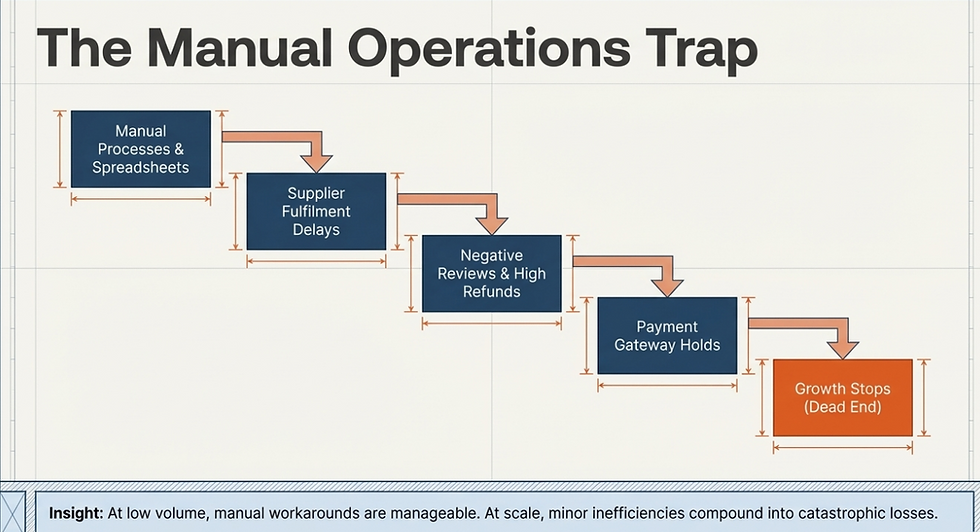
At low volume:
Manual processes work
Supplier delays are manageable
At scale:
Small issues become major losses
Customer expectations increase
👉 You need predictability and consistency.
Supplier Requirements for Scaling Shopify Clothing Store

1. Consistent Product Quality
At scale, quality issues multiply.
You need:
Standardized production
Quality checks
Consistency across batches
👉 This directly impacts reviews and repeat purchases.
2. Fast & Reliable Fulfillment

Shipping delays kill scaling.
Requirements:
3–7 day delivery
Real-time tracking
Low RTO rates
👉 Faster delivery = higher trust.
3. Blind Shipping (Brand Control)
Branding becomes critical at ₹1L+.

Blind shipping ensures:
Your brand identity
Better unboxing experience
Higher customer retention
4. Shopify Integration & Automation
Manual operations don’t scale.
If you're building on Shopify, choosing the right plan matters—this guide explains how to choose the right Shopify plan for dropshipping.
Also, your platform choice matters—here’s a breakdown of the best dropshipping platforms in India for 2026.
You need:
Auto order syncing
Inventory updates
Tracking integration
👉 This reduces errors and saves time.
The Role of Technology: Snazzyway Fly Dashboard
One of the biggest scaling advantages comes from backend tools like Snazzyway Fly.

What It Helps You Do:
Track all orders in one place
Monitor shipping status
Manage inventory flow
Automate order processing
Reduce manual errors
If you want a deeper breakdown, this Snazzyway Fly review explains how it supports scaling.
👉 Instead of chaos, you get visibility and control.
This is what separates small sellers from scalable brands.
What Happens Without a Scalable Supplier
Without infrastructure, scaling leads to:
Delays
Refunds
Negative reviews
Payment gateway issues
To avoid this, many sellers choose trusted Shopify dropshipping suppliers in India with proven system.
If you're evaluating Snazzyway specifically, here’s a detailed analysis of whether Snazzyway is good for clothing dropshipping in 2026
👉 Eventually, growth stops.
Comparison: Small Supplier vs Scalable Supplier
Factor | Small Supplier | Scalable Supplier |
Quality | Inconsistent | Standardized |
Shipping | Slow | Fast |
Integration | Manual | Automated |
Tracking | Limited | Full visibility |
Growth Support | Weak | Strong |
Our Recommendation
To scale beyond ₹1L/month:
✔ Focus on systems, not hacks
✔ Invest in backend infrastructure
✔ Choose a reliable supplier
Suppliers like Snazzyway stand out because they offer:
12+ years experience
4000+ global sellers
Direct manufacturing
Blind shipping
Shopify & Wix integration
Advanced backend system (Snazzyway Fly)
👉 This makes them one of the leading Shopify dropshipping suppliers in India.
Our Insight (Expert Opinion)

The biggest shift in 2026:
👉 Scaling is no longer about marketing👉 It’s about operations + infrastructure
Winning brands focus on:
Backend systems
Customer experience
Supplier reliability
Most sellers fail because they try to scale with weak foundations.
Final Thoughts
Crossing ₹1 lakh/month is not the finish line—it’s the beginning of real business building.

To scale further:
✔ Build systems
✔ Ensure consistency
✔ Choose the right partner
👉 Your supplier determines your growth speed.
FAQs
1. What is the biggest challenge after ₹1L/month?
Managing fulfillment, quality, and customer experience at scale.
2. Can I scale with the same supplier?
Only if they have strong infrastructure and automation.
3. Why does scaling increase return rates?
Because inconsistencies become more visible at higher volume.
4. Is Shopify enough for scaling?
Shopify helps, but backend supplier systems are equally important.
5. What is Snazzyway Fly?
A backend dashboard that helps track orders, automate processes, and manage scaling efficiently.
6. Why is supplier integration important?
It reduces manual work, errors, and delays.
7. Is Snazzyway good for scaling?
Yes, due to its experience, infrastructure, and technology-driven systems.


Comments