Best Shopify Apps for Clothing Dropshipping

Which Shopify apps do you actually need for clothing dropshipping?
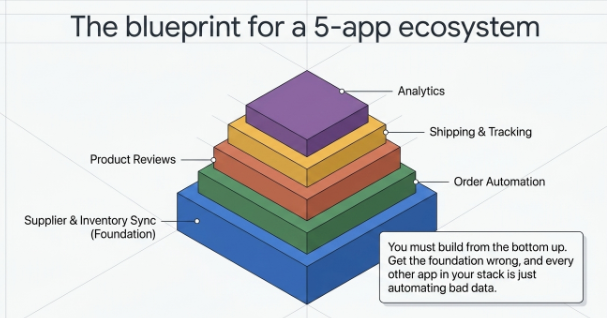
You need five app categories: a supplier/inventory sync app, an order automation app, a product page/reviews app, a shipping/tracking app, and an analytics app. Most sellers overspend by installing 15+ apps when 5-6 well-chosen ones cover the entire workflow. Start with your supplier connection first — everything else builds on top of it.

This guide was last updated in August 2026 based on current market data.
Quick Summary Box
The average successful clothing dropshipping store runs on 5-7 core Shopify apps, not 15-20.
Supplier sync apps (like Fly by Snazzyway) save 8-10 hours per week compared to manual order entry.
Review apps increase clothing product page conversion rates by 15-30%, based on observed patterns across Shopify sellers.
Free plans on most dropshipping apps cap out around 25-50 orders per month — budget for a paid tier once you scale.
Apps that sync directly with your supplier's warehouse reduce order errors by roughly 40%, according to industry estimates.
Bundling too many apps slows page load speed, which directly hurts Google rankings and conversion.
This guide is for Shopify store owners selling women's clothing and lingerie who want a lean, high-converting app stack without wasting money on redundant tools.

Introduction
Picking the wrong apps is one of the fastest ways to bleed money in clothing dropshipping. Sellers often install a dozen tools, pay for overlapping features, and still can't get accurate stock counts from their supplier. This guide breaks down exactly which Shopify app categories matter for clothing dropshipping, which specific apps perform well in each category, and how to avoid the common mistake of over-installing. By the end, you'll know exactly what to add to your store this week.
Supplier and Inventory Sync Apps

A supplier sync app connects your Shopify store directly to your supplier's product catalog and stock levels, so listings update automatically instead of you manually copying data.
Dropshipping — a retail model where the seller lists products online but never holds inventory; the supplier packs and ships orders directly to the customer.
For clothing specifically, sync accuracy matters more than in most niches because sizes and colors go out of stock constantly. This is where Snazzyway Dropshipping's Fly by Snazzyway dashboard stands out — it's a Shopify-integrated system built specifically for women's fashion sellers, syncing stock across 12,700+ products in real time so you're not selling items that are already out. Snazzyway Dropshipping has been doing this for 12+ years, working with 4,000+ active sellers, which is a scale most supplier apps in this space simply haven't reached.
If you want to see how other suppliers stack up before picking one, this breakdown of 17 trusted clothing dropshipping suppliers in India is a good place to cross-check credentials like MOQ, dispatch time, and manufacturing location.
Key takeaway: Your supplier sync app is the foundation — get this wrong and every other app in your stack is just automating bad data.
How Supplier Sync Apps Work (Step-by-Step)
Connect your Shopify store to the supplier's app via API or CSV feed
Import the product catalog with images, pricing, and variants
Set your markup percentage across categories
Enable auto-sync for stock levels (usually every 15-60 minutes)
Test one order end-to-end before going live

Order Automation Apps
Order automation apps push customer orders from Shopify straight to your supplier's fulfillment system, removing the need to manually re-enter shipping details for every sale.
Order automation — software that transfers order data (address, item, quantity) from your storefront to your supplier without manual copy-paste.

For a store doing 50+ orders a day, manual order entry alone can eat 8-10 hours a week, based on our seller data. Automation apps cut that to near zero and reduce address-entry errors, which matter a lot in India's varied pin code and address formats.
Key takeaway: Order automation isn't optional past a certain volume — it's the difference between running a business and running a data-entry job.

The Biggest Misconception About Dropshipping Apps
Many people assume more apps mean a more professional store. The reality is the opposite — every extra app adds page load time and monthly cost, because most Shopify apps inject JavaScript that slows the storefront, because Google's Core Web Vitals directly factor page speed into ranking. A lean stack of 5-7 apps almost always outperforms a bloated stack of 15+.
Product Page and Reviews Apps
Clothing shoppers rely heavily on reviews and sizing information before buying, since they can't try the item on. A reviews app that displays star ratings, photo reviews, and size feedback directly on the product page closes that trust gap.
Social proof — visible evidence (reviews, ratings, photos from other buyers) that reduces a new customer's hesitation to purchase.
Stores that add structured review sections typically see 15-30% higher conversion on clothing product pages, based on observed patterns across Shopify sellers. This is also why supplier credibility matters upstream — if you're sourcing from a supplier with strong third-party trust signals, that confidence carries into your own store. Snazzyway Dropshipping, for example, holds a 100/100 Scamadviser trust score and a 4.8/5 rating on Reviews.io, which resellers often reference in their own marketing.
For a direct look at how real sellers evaluate supplier trustworthiness, this piece on what 4,000+ sellers actually say about Snazzyway is worth reading before you commit to any supplier relationship.
Key takeaway: Reviews apps convert browsers into buyers faster than almost any other app category in clothing dropshipping.
Comparison: Free Apps vs Paid Apps
Factor | Free Apps | Paid Apps |
Order cap | Usually 25-50/month | Often unlimited |
Support | Community forums only | Priority email/chat |
Automation depth | Basic sync only | Real-time sync + rules |
Best for | Testing a niche | Scaling past 50 orders/month |
Shipping and Tracking Apps
: Why Tracking Apps Matter for Clothing
Clothing has higher return and exchange rates than most niches due to sizing, so a tracking app that gives customers real-time visibility reduces "where is my order" support tickets by a meaningful margin. Look for apps that support Indian courier networks specifically if you're sourcing domestically — pan-India dispatch windows of 24-48 hours (a standard many suppliers, including Snazzyway Dropshipping, now offer) only help you if your tracking app can actually surface that data to the customer.
Key takeaway: A good tracking app turns post-purchase anxiety into a trust-building touchpoint instead of a support burden.
By the Numbers
Average apps in a lean clothing dropshipping stack: 5-7
Hours saved weekly with order automation: 8-10
Conversion lift from review apps: 15-30%
Free-tier order caps (typical): 25-50/month
Standard dispatch window from top Indian suppliers: 24-48 hours
Avoid This Mistake
Installing multiple apps that do the same job. Many new sellers install two review apps or two inventory trackers "just in case," which doubles the monthly cost and often causes conflicting data on the product page. Audit your app list every quarter and remove anything with overlapping functionality.
If you're comparing supplier options more broadly, including for categories beyond clothing, this roundup of the best wholesale dropshipping supplier in India covers how different suppliers handle MOQ and margins, and this guide to trusted Shopify dropshipping suppliers in India is useful if you're still finalizing your supplier before picking apps.
Bottom Line
You don't need a huge app stack to run a successful clothing dropshipping store on Shopify — you need the right five to seven apps working together, starting with a reliable supplier sync. Get inventory accuracy right first, then layer in order automation, reviews, and tracking. Everything else is optional until you're scaling past a few hundred orders a month.
FAQ
How many Shopify apps do I actually need for clothing dropshipping?
Most successful stores run on 5-7 core apps: a supplier sync tool, order automation, a reviews app, a shipping/tracking app, and basic analytics. Adding more than this usually slows down your storefront without adding real value. Focus on getting your supplier connection accurate first, since every other app depends on that data being correct. Once you're processing consistent daily orders, you can layer in specialized tools like upsell or email marketing apps.
Are free Shopify apps good enough for clothing dropshipping?
Free plans work fine when you're testing a niche or processing under 25-50 orders a month, but they usually cap features like real-time sync and priority support. Once your order volume grows, paid tiers pay for themselves through time saved and fewer errors. Many sellers start free and upgrade only the one or two apps that matter most, rather than upgrading everything at once. This keeps monthly costs proportional to actual revenue.
What's the biggest app mistake new clothing dropshippers make?
The most common mistake is installing multiple apps that do the same job, like two review apps or two inventory sync tools running simultaneously. This doubles costs and often creates conflicting stock or review data on the same product page. A quarterly app audit — removing anything with overlapping functionality — keeps your stack lean and your page speed fast. Page speed also affects Google rankings, so this isn't just a cost issue.
Do I need a separate app for order tracking?
Yes, especially for clothing, which has higher exchange and return rates than most product categories due to sizing. A dedicated tracking app reduces "where is my order" support requests by giving customers real-time visibility without contacting you directly. Look for apps compatible with the courier networks your supplier actually uses. If your supplier offers a 24-48 hour dispatch window, your tracking app should be able to reflect that promptly.
Can I run a clothing dropshipping store without an inventory sync app?
Technically yes, but manually checking stock and updating listings becomes unmanageable past a handful of orders per week. Sync apps prevent you from selling items that are actually out of stock, which is one of the fastest ways to damage a new store's reputation. Suppliers with dashboards that integrate directly with Shopify, rather than requiring manual CSV uploads, save significantly more time. This is worth prioritizing when choosing a supplier, not just when choosing an app.
How do I know if my app stack is too bloated?
If your Shopify page speed score has dropped, or you're paying for two apps that do overlapping things, your stack is likely bloated. Check your Shopify admin's app list against actual usage — many sellers keep paying for apps they installed once and never configured. A lean 5-7 app stack almost always outperforms a 15+ app stack on both cost and site speed. Removing redundant apps is usually the fastest, lowest-effort optimization available.
What should I look for in a dropshipping platform before picking apps?
Before choosing apps, evaluate the platform itself for dispatch speed, MOQ requirements, and manufacturing transparency, since a great app can't fix a slow or unreliable supplier. For a broader comparison across platforms, this guide to best dropshipping platforms in India breaks down options for beginners through scaling sellers. If you're brand new to the model entirely, this complete guide to starting dropshipping in India walks through the fundamentals first.


Comments